
Do your nails always chip too soon? Are you tired of manicures that do not last or harm your natural nails? Choosing the right nail care can be confusing, but understanding the differences in a japanese vs russian manicure can help you achieve lasting beauty and nail health. A Japanese manicure is a chemical-free restorative treatment using beeswax and minerals, while a Russian manicure is a precision gel technique using an e-file for long-lasting, structured results.
These two popular techniques offer very different approaches to nail care. This guide will explain each method to help you decide which is best for you.
Let us look at what sets them apart.
The core philosophies of Japanese and Russian manicures
The core ideas behind Japanese and Russian manicures come from different goals for nail health and beauty. The Japanese manicure is a restorative treatment that works to improve the natural condition of your nails. It is rooted in a tradition that values subtle elegance and uses organic ingredients to nourish the nail plate directly. The main objective is to create a healthy, natural gloss without any chemical polishes.
A russian manicure, on the other hand, is a modern technique focused on precision and structure. Its philosophy centers on creating a perfect canvas for long-lasting gel applications. Technicians use specialized tools for precise cuticle care and to build a strong, durable nail structure. This approach is all about achieving a flawless, highly polished finish that endures for weeks. It prioritizes hygiene and a clean aesthetic above all else.
The restorative art of a Japanese manicure
A Japanese manicure is a detailed process that nurtures your natural nails back to health. The procedure avoids harsh chemicals and instead relies on gentle techniques to strengthen and beautify the nail plate. It is an excellent choice for anyone looking to recover from damage caused by acrylics or improper gel removal.
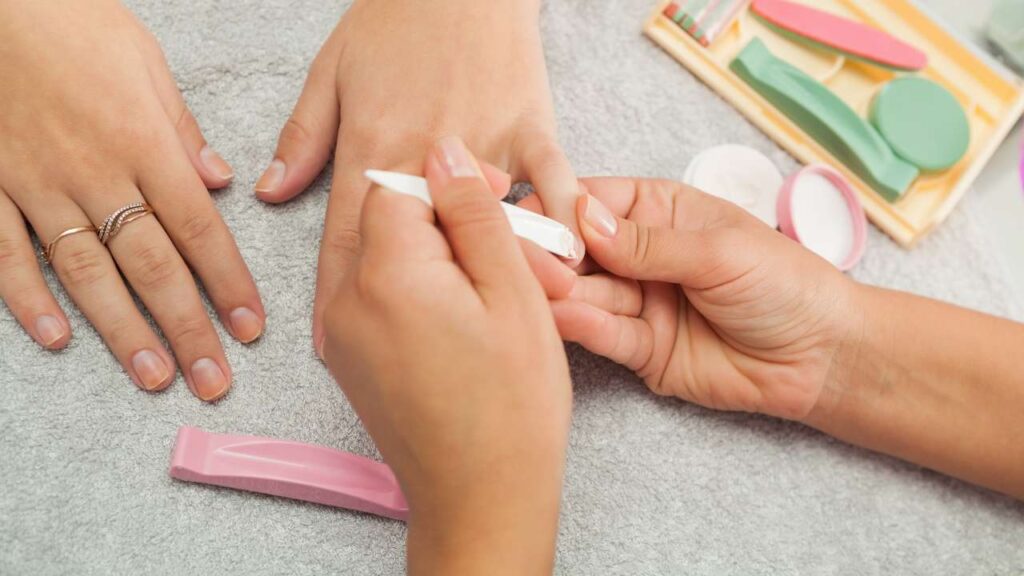
The process begins with gentle shaping and soft buffing, often using files covered in chamois leather to prevent splitting. The main part of the treatment involves massaging a mineral-based paste, often from brands like P.Shine, rich in beeswax and vitamins directly into the nail. This is followed by a powder that locks in the nutrients and creates a brilliant, natural shine. A Business Insider review highlighted that after this treatment, natural nails feel significantly stronger. This technique delivers a clean, polished look that can last for weeks while actively improving your nail’s resilience.
Russian manicure: Precision, durability, and structured beauty
A russian manicure offers a high-tech approach to achieve a flawless, long-lasting look with gel polish. This technique is performed entirely on dry hands, which is a key difference from traditional methods. Working dry prevents the nail plate from expanding with water, which helps create a stronger bond and superior adhesion for popular gel products like OPI GelColor or Gelish. This attention to detail greatly reduces the chances of lifting or chipping.
The defining feature is the use of an electronic file (e-file) with different specialized bits to perform a microscopic exfoliation of the cuticle. This process painlessly removes only dead tissue, creating a perfectly clean nail bed. According to the Nail Manufacturers Council, 60% of clients will pay more for services that ensure medical-grade sterilization, a standard often met in this procedure. The result is a manicure that can last three to five weeks, with a much less noticeable regrowth line. This makes it a great investment for those with a busy lifestyle.
Choosing between Japanese and Russian manicures for your lifestyle
Selecting the right manicure depends entirely on your personal needs, aesthetic goals, and daily activities. A japanese vs russian manicure comparison shows two distinct paths to beautiful nails. The Japanese method is ideal if you prioritize natural nail health and a subtle, understated appearance. It is a restorative treatment that strengthens your nails over time.
In contrast, the russian manicure is built for durability and a hyper-polished look. It provides a structured, chip-free finish that holds up for weeks, making it perfect for professional settings and demanding schedules. The choice comes down to deciding between a low-maintenance, natural glow or a pristine, long-wearing gel finish. Consider your budget, time, and nail health goals when deciding.
| Feature | Japanese Manicure | Russian Manicure |
|---|---|---|
| Core Philosophy | Natural health, restoration | Precision, durability, structure |
| Process | Gentle buffing, natural pastes | E-file dry cuticle work, gel application |
| Key Ingredients/Tools | Beeswax, minerals, chamois | E-file, specialized bits, hard/builder gels |
| Longevity | ~2-4 weeks (natural shine) | 3-5 weeks (gel-based) |
| Natural Nail Health (Post-Removal) | Improved, strengthened | May require rest period |
| Approx. Time | 2.5 hours | 2.5-3 hours |
| Approx. Cost | ~$60 | ~$90 |
Which manicure is right for you?
Opt for a Japanese Manicure if:
You want to focus on natural nail health and recovery from damage. Your main goal is strengthening your nails with a chemical-free treatment that offers a subtle, healthy shine.
You have sensitive skin or nails that react poorly to harsh chemicals or abrasive tools. The gentle, nourishing ingredients are perfect for delicate nail beds.
You need an easy and non-damaging removal process. Since no heavy gels are used, removal is quick and leaves nails feeling stronger than before.
Opt for a Russian Manicure if:
You need a highly polished, structured, and long-lasting look that remains perfect for weeks. This is ideal for a busy schedule that does not allow for frequent salon visits.
You enjoy gel enhancements, builder gels, and detailed nail art. The clean cuticle line creates a flawless canvas for any design.
You value extreme precision and a neat appearance. The technique minimizes the look of regrowth, keeping your manicure looking fresh for longer.
Experience precise nail care at Xpert Russian Manicure Salon
At Xpert Russian Manicure Salon, our skilled technicians specialize in advanced Russian manicure techniques. We prioritize medical-grade hygiene and precise application, helping to create a superior finish and lasting durability. Our customized approach means each service is tailored to your specific nail needs, delivering flawless results that remain perfect for weeks.
Making the best choice for your nail care
Both the Japanese and Russian manicure techniques offer distinct benefits depending on your individual needs. The best choice is the one that aligns with your lifestyle and aesthetic goals. Always seek a professional application from a highly trained technician to achieve optimal results and lasting nail health.
FAQ’s about Russian vs Japanese manicure
Is a Russian manicure safe?
Yes, it is very safe when performed by certified technicians. They use medical-grade sterile tools and proper e-file techniques to remove only dead tissue without harming the surrounding skin.
How long do Japanese manicures last?
The beautiful, natural shine from a Japanese manicure typically lasts about two weeks. The health benefits, such as increased strength and resilience, continue to improve your nails for much longer.
Can a Russian manicure damage your nails?
Improper technique from an untrained individual can cause damage. However, the risk is minimal with a trained, certified technician from a salon like Xpert Russian Manicure Salon who uses precise e-file control.
Are Japanese manicures good for weak nails?
Yes, Japanese manicures are excellent for weak or damaged nails. The treatment focuses on using natural, nourishing ingredients like beeswax and minerals to strengthen and restore the nail plate.
What is the difference between a Russian manicure and a regular manicure?
Russian manicures are performed dry and use e-files for precise cuticle removal to improve longevity. Regular manicures often involve soaking hands in water and using traditional tools like cuticle pushers and cuticle nippers for cuticle care.