

Russian Manicure vs Regular Manicure: What Is the Difference?
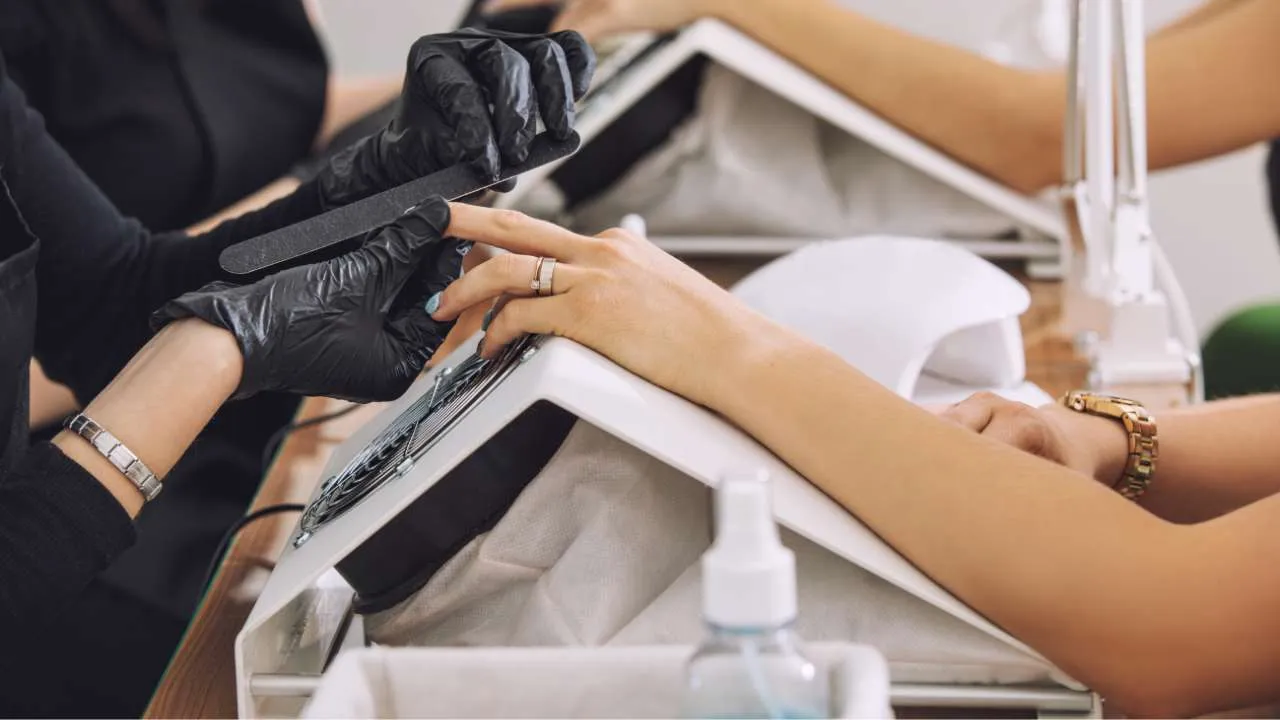
Short answer: A regular manicure is usually a soak-based service with manual cuticle care that takes 30 to 60 minutes. A Russian manicure is done dry with an e-file and fine tools, takes about 90 minutes to two hours, costs more, and often gives a cleaner cuticle line and gel that lasts longer. It also depends more on the technician's skill, and it carries more risk when done poorly.
Choosing between a Russian manicure and a regular manicure comes down to how much time you have, what finish you want and how comfortable you are with detailed work near the cuticle. Both can look neat. They get there in very different ways.
Russian manicure vs regular manicure at a glance
| Regular manicure | Russian manicure | |
|---|---|---|
| Water soak | Often a warm soak to soften skin | Usually done dry, with no soak |
| Main tools | Hand files, pushers, nippers | Electric file with fine bits, plus fine nippers or scissors for loose dead skin |
| Cuticle care | Cuticles are softened and pushed back or trimmed | Thin dead tissue on the nail plate is cleaned away; how far a technician works varies |
| Typical time | About 30 to 60 minutes | About 90 minutes to two hours, longer for a first visit or nail art |
| Finish | A small gap often remains between polish and skin | Product is kept very close to the skin line for a clean, even edge |
| Wear with gel | Often about two to three weeks | Commonly about three to four weeks, sometimes longer |
| Cost | Lower | Usually higher because of the extra time and training |
| Skill needed | Basic licensing | E-file training and a steady hand matter a great deal |
Wear times and costs vary by technician, city and product, and they are planning figures rather than promises. For a closer look at wear time, read how long a Russian manicure lasts.
How the cuticle care differs
The words "cuticle" and "eponychium" are often used loosely. The eponychium is the living skin fold at the base of the nail. The cuticle, strictly, is the thin layer of dead tissue that sticks to the nail plate. In a regular manicure the skin is usually softened in water and pushed back or trimmed. In a Russian manicure a technician uses fine bits to clean the dead tissue from the nail plate and smooth rough skin, so gel can sit close to the skin line. See cuticle vs eponychium for the anatomy.
The American Academy of Dermatology recommends leaving cuticles alone in any manicure, because cutting or pushing them can make it easier for germs to enter. A good technician of either style keeps that in mind.
Finish and durability
Because a Russian manicure cleans the nail surface carefully and places gel very close to the skin, the grow-out gap shows more slowly and the edge looks tidy for longer. Careful dehydration and a small apex of structure gel can also help the coating resist lifting. None of this guarantees extra weeks. Product quality, curing, nail growth and your habits decide how long any set lasts, which is why a well-done regular gel manicure can outlast a rushed Russian one.
Safety compared
A dry service avoids a shared soak, but it adds powered tools near the skin, so the risk depends heavily on training, pressure and tool cleaning. A regular manicure that cuts cuticles carries its own infection risk. Neither is safe by default. The honest comparison is a careful provider against a careless one, whichever style they offer. Read is a Russian manicure safe and signs of an unhygienic nail salon before you book.
What a regular manicure involves
A classic manicure usually starts with removing old polish, then a short soak or a softening product, cuticles pushed back with a pusher, and hangnails trimmed. Nails are shaped with a hand file, hands are massaged, and polish or gel is applied, leaving a small gap at the cuticle so product does not flood the skin. It takes about 30 to 60 minutes and suits people who want a tidy, quick result.
What a Russian manicure involves
A Russian manicure starts dry. After a consultation, a technician removes old product, shapes the nail, and uses fine bits to clean the thin dead tissue from the nail plate and smooth rough skin. The surface is lightly buffed and dehydrated, and gel is applied in thin layers close to the skin line. The full sequence is in how to do a Russian manicure.
What the first four weeks can look like
| Regular polish | Regular gel | Russian manicure with gel | |
|---|---|---|---|
| Week 1 | Fresh, may start to chip | Fresh and glossy | Fresh with a very clean cuticle line |
| Week 2 | Often worn or chipped | Still glossy, small grow-out gap | Glossy, gap barely visible |
| Week 3 | Usually redone | Gap and early lifting may show | Gap shows, often still intact |
| Week 4 | - | Usually removed or redone | Fill or removal often due |
This is a typical pattern, not a promise. Nail growth, product and daily habits move every column up or down.
Time and cost in more detail
Time is the main cost driver. A Russian manicure takes about twice as long or more, so most salons price it above a standard manicure, and nail art, extensions and removal of old product add to the total. Ask for a quote that includes removal, and compare the cost per week of wear rather than the price of one visit. A cheaper service that lifts early can cost more in the end.
Common myths
- "Dry means sterile." A dry service avoids a shared soak, but hygiene depends on how tools and bits are cleaned.
- "More expensive means better." Training, light pressure and clean tools matter more than the price.
- "It always hurts." It should not. You may feel vibration or light pressure, but sharp pain or burning is a reason to stop.
- "It always damages nails." Damage comes from over-filing and cutting living skin, whichever manicure you choose.
Which one is right for you?
- Choose a regular manicure if you want a quick, classic service, are on a tighter budget, or prefer to leave cuticles alone.
- Choose a Russian manicure if you want a very clean cuticle line, your gel tends to lift near the cuticle, and you can sit for about two hours with a trained, licensed technician.
- Ask for a middle path if you are unsure: a dry preparation that stays on the nail plate, without cutting living skin.
What to ask before booking
- What will be done to my cuticles, and can I decline cutting?
- What training do you have with e-file work, and what license applies here?
- How are reusable bits and tools cleaned, and which items are single-use?
FAQs
Is a Russian manicure better than a regular manicure?
It depends on what you want. It can give a cleaner finish and longer wear, but it takes longer, costs more and relies on a skilled technician. A careful regular manicure is a sound choice for many people.
Is a Russian manicure safe?
It can be performed safely by a trained, licensed technician with clean tools and light pressure, but no manicure is risk-free. See our safety guide.
How long does a Russian manicure last compared with a regular one?
Commonly about three to four weeks with gel, against about a week for regular polish and two to three weeks for regular gel. Individual results vary.
Can a Russian manicure damage my nails?
Over-filing or cutting living skin can cause irritation or thinning, whatever the label. With careful work that leaves living tissue intact the risk is lower. See Russian manicure soreness and thin nails after a Russian manicure.
What is the difference between the cuticle and the eponychium?
The cuticle is the thin dead layer on the nail plate. The eponychium is the living skin fold at the base of the nail, which should be left in place.
Related guides
More in this topic: Russian Manicure guides.