
Sometimes you might be wondered why some manicures look flawless for weeks, while others chip within days? What is the secret to achieving a truly pristine nail appearance that withstands the demands of daily life? The answer often lies in the specific technique used by your nail technician. To clarify, a Russian manicure utilizes an electric file on dry nails for up to 3-5 weeks of impeccable wear, whereas a regular manicure involves soaking nails in water and using manual tools, typically lasting only 5-7 days.
Choosing the right manicure is about more than just color. It involves understanding the process, the tools, and the impact on your nail health. The debate between a russian manicure vs regular manicure highlights two very different approaches to nail care.
This guide will explain the key differences in method, precision, durability, and safety. By understanding these distinctions, you can make an informed choice that aligns with your lifestyle and beauty goals. Let’s examine what sets these two popular services apart.
What distinguishes russian manicure from a regular manicure?
The main distinction between a Russian manicure and a regular manicure is the core methodology, specifically the use of water and the tools for cuticle care. A regular manicure relies on a water-based approach with manual tools, while a Russian manicure is a completely dry service that uses an electric file for precision work. These procedural differences result in very different experiences and outcomes.
The traditional regular manicure begins by soaking the hands in warm water to soften the skin. A technician then uses a cuticle pusher and nippers to manually trim away excess skin. While still popular, accounting for over 60% of salon services in some regions, this process is generally quick, taking about 30 to 45 minutes, and focuses on basic grooming.
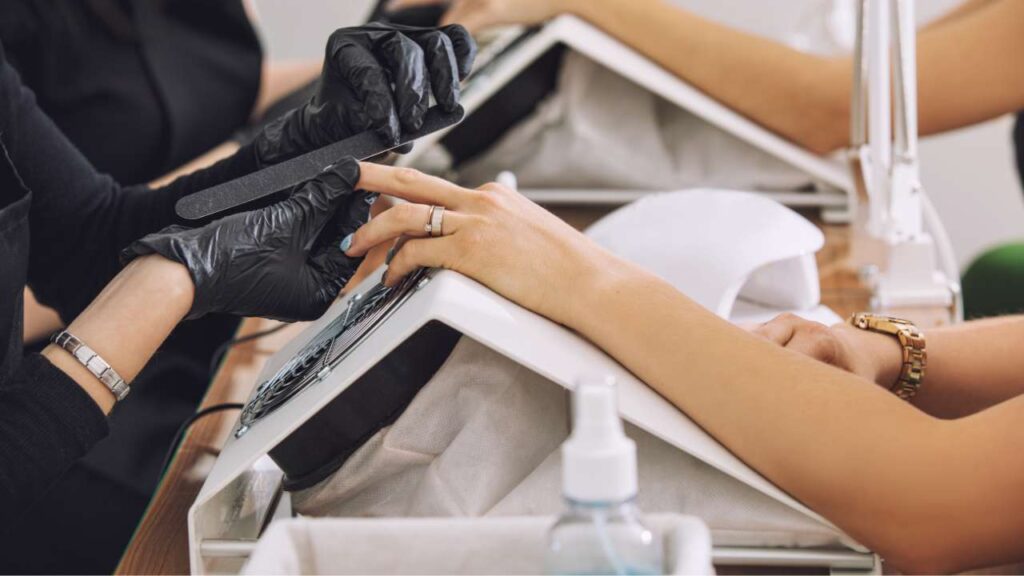
Originating in Eastern Europe and also legal in most of US states, the russian manicure technique, also known as an e-file or dry manicure, avoids water entirely. This keeps the nail plate stable and prevents it from expanding. A certified technician uses an electric file (e-file), often from reputable brands like Kupa or Medicool, with various specialized diamond bits to gently exfoliate dead skin from the nail plate and surrounding folds. At salons like Xpert Russian Manicure Salon, technicians are trained to remove only dead tissue with hospital-grade sterilized tools, which takes between 60 to 90 minutes.
Key differences at a glance: a comparison table
| Feature | Regular Manicure | Russian Manicure |
|---|---|---|
| Water Usage | Warm water soak to soften skin | Completely dry, no soaking |
| Cuticle Care | Manual pushing, nipping of softened cuticles | E-file with specialized bits for precision dead skin removal |
| Tools Used | Cuticle pusher, nippers, standard nail file | Electric file (e-file), diamond bits, sharp tools |
| Longevity | Typically 5-7 days | 3-5 weeks (a long-lasting finish) |
| Precision Level | General grooming, leaves some residual cuticle | Extremely clean, removes all dead tissue |
How do precision, finish, and durability compare?
A Russian manicure provides a higher level of precision, a more polished finish, and substantially longer durability compared to a regular manicure. The russian manicure technique is designed to create a flawless look that lasts for weeks, making it a popular choice for those with busy schedules. The differences in application and preparation directly affect the final aesthetic and how long the manicure stays intact.
In terms of precision and aesthetic finish, a regular manicure often leaves a less refined border around the nail. Because polish is applied away from the skin, a visible growth gap appears within a few days. The Russian manicure, however, creates what many call a “photoshopped” look. The thorough cuticle removal process allows the technician to apply polish perfectly flush with the cuticle line, creating the illusion of a longer nail bed and delaying the appearance of nail growth.
The difference in durability is significant. A regular manicure typically lasts five to seven days before chipping. This is partly because soaking the nail in water causes it to absorb moisture and expand, which can interfere with polish adhesion. In contrast, a russian manicure can last three to five weeks without chipping. The dry preparation ensures the nail plate is in its natural, stable state, creating an ideal surface for gel polish, such as OPI GelColor or CND Shellac, to bond securely. Surveys show that clients report 90% higher satisfaction with the chip-resistance of Russian manicures compared to traditional methods.
Factors affecting longevity for both types
The lifespan of any manicure is influenced by several key factors. Understanding these can help you maintain your nails and get the most out of your salon visit.
Technician skill and training: The expertise of the nail technician is paramount. A properly trained professional will use correct application methods that prevent premature lifting and chipping, which is especially important for the e-file technique.
Product quality and application: The quality of the products used, including base coats, gel polish, and top coats, directly impacts durability. Proper application in thin, even layers and correct curing under a UV/LED lamp are also vital for achieving extended durability.
Client aftercare and daily activities: How you care for your nails after leaving the salon plays a large role. Avoiding harsh chemicals, wearing gloves for chores, and applying cuticle oil daily can extend the life of both manicure types.
Considering health, safety, and expertise for your nail care?
When choosing between a russian manicure vs regular service, health and safety should be a top priority, and these factors are closely tied to technician expertise. The dry technique of a Russian manicure offers distinct advantages for hygiene, but it also requires a much higher level of skill to perform safely. The sterilization of tools and the technician’s knowledge of nail anatomy are essential for preventing injury and infection. It is crucial that salons adhere to strict guidelines set by professional bodies like the State Board of Cosmetology or national beauty associations.
Hygiene protocols differ between the two services. Regular manicures often use water bowls for soaking, which can pose a risk of cross-contamination if not cleaned and disinfected properly between clients. The Russian manicure’s dry method eliminates this risk. Reputable salons also use medical-grade sterilization, such as an autoclave, to ensure all metal e-file bits are completely sterile before each use.
The required skill level is a major point of difference. A regular manicure can be performed safely by most technicians with basic cosmetology training. A russian manicure, however, requires advanced education and a deep understanding of this specialized technique. An untrained person using an e-file can cause significant damage, such as over-filing the nail plate, causing painful heat spikes, or cutting the skin. Data suggests that improper e-file use accounts for approximately 15% of reported nail damage in salon settings when technicians lack adequate training. It is important to choose a salon with certified technicians who are experts in e-file operation.
For overall nail health, the meticulous cuticle care aspect of the Russian method is often considered superior. Instead of cutting live tissue, which can happen with manual nippers, the e-file precisely buffs away only the dead skin. This gentle approach promotes healthier nail growth over time and can reduce the occurrence of hangnails and cracked cuticles, making it a great option for those with sensitive skin.
Discover exceptional nail care with Xpert Russian Manicure Salon
Choosing the right manicure is a decision that impacts your style, schedule, and nail health. At Xpert Russian Manicure Salon, our certified technicians specialize in the advanced russian manicure technique. We are committed to providing a service that delivers not only a flawless, long-lasting finish but also prioritizes the highest standards of hygiene and safety. Experience the difference that expert training and precision care can make for your nails.
Considering lasting nail style
Deciding between a russian manicure vs regular manicure depends on your personal priorities. If you are looking for a quick, classic, and budget-friendly option, a regular manicure is a suitable choice. It offers a clean look for a shorter duration, perfect for those who enjoy changing colors frequently.
However, if your goals are impeccable precision, outstanding durability, and a health-focused approach to nail care, the russian manicure is the clear winner. Recent market analysis shows that repeat client bookings for Russian manicures are 40% higher than for regular manicures, reflecting strong client satisfaction. It is an investment in a consistently polished appearance that stands up to a busy lifestyle. By understanding these differences, you can select the service that best reflects your standards for beauty and wellness.
FAQ’s about Regular manicure vs Russian
Is russian manicure safe?
Yes, a russian manicure is very safe when performed by a properly trained and certified technician. The key is using the correct technique with sterilized tools to remove only dead skin without damaging the live tissue or the natural nail plate.
How long does a russian manicure typically last?
A Russian manicure, especially when finished with a quality gel polish, typically lasts between three and five weeks without any chipping. Its impressive longevity is due to the careful dry preparation of the nail, which creates a stable surface for optimal polish adhesion.
Can a russian manicure damage my nails?
A russian manicure can cause damage, such as thinning the nail plate or creating “rings of fire,” if performed by an untrained individual. However, when done by a certified professional who understands nail anatomy and proper e-file usage, it is a gentle method that actually promotes healthier nails.
What is the difference between cuticle and eponychium?
The cuticle is the thin layer of non-living tissue that is attached to the nail plate, which is what is safely removed during a Russian manicure. The eponychium is the small band of living tissue at the base of your nail, which should never be cut or trimmed as it protects the nail from infection.
What are the benefits of choosing a russian manicure?
The primary benefits of a russian manicure are its extended wear time, a flawless and clean aesthetic, and superior hygiene since it’s a dry service. It also helps promote healthier nail growth by gently removing only dead skin, which reduces hangnails and irritation.