

Dip Powder vs Gel vs Acrylic Nails: Which Should You Choose?
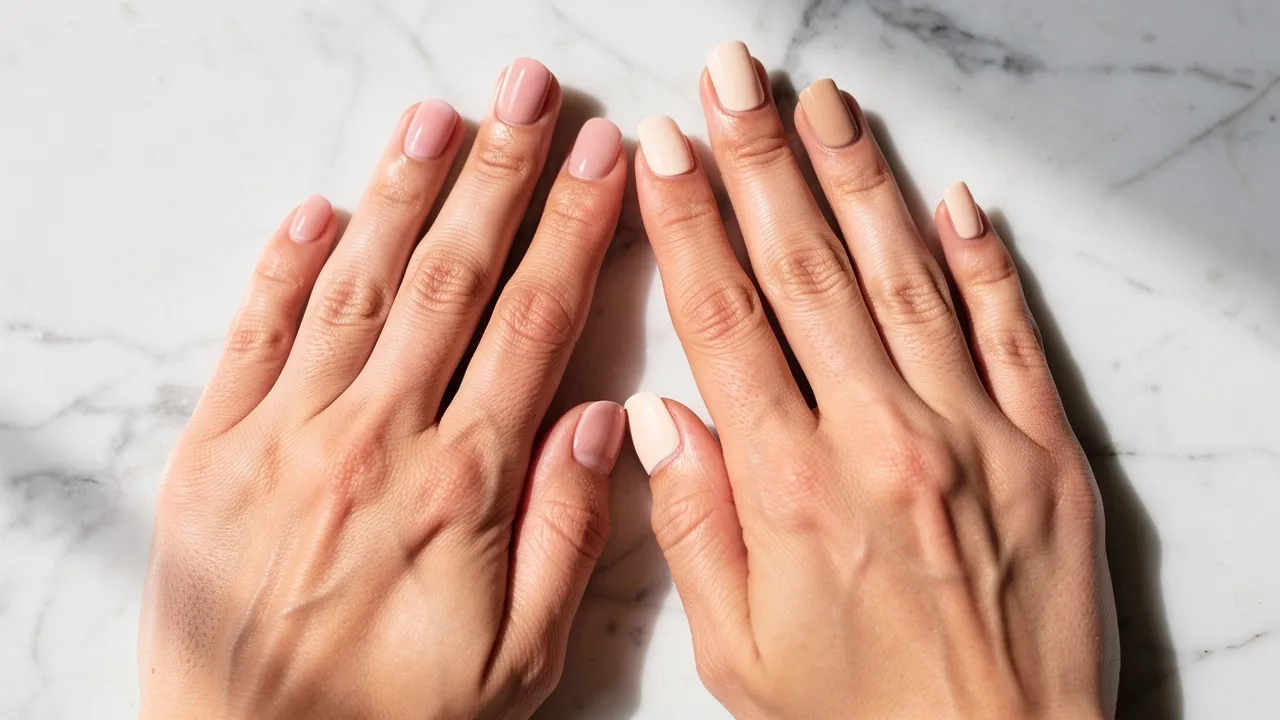
Short answer: Dip powder is built by dipping nails into colored powder over a sticky base and cures without a lamp. Gel is a flexible coating cured under a UV or LED lamp. Acrylic is a liquid and powder mix that hardens in the air. Gel is the lightest, acrylic the firmest, and dip sits in between.
Dip powder, gel and acrylic are three different ways of putting a durable coating on the nail. They look similar once finished, but they are applied, cured and removed differently, and those differences decide which one suits your nails and routine.
How each system works
- Dip powder: a base adhesive is brushed on, the nail is dipped into (or covered with) colored powder, and the layers are sealed with an activator and top coat. No lamp is needed.
- Gel: a gel polish or thicker gel is brushed on in thin layers and cured under a UV or LED lamp. See the full comparison in Gel-X vs gel polish.
- Acrylic: a liquid monomer is mixed with polymer powder into a bead that is placed on the nail and hardens in the air. Compare it with gel in acrylic vs gel nails.
Side-by-side comparison
| Dip powder | Gel | Acrylic | |
|---|---|---|---|
| Curing | Air-cured with an activator | UV or LED lamp | Air-cured |
| Feel | Medium thickness, fairly rigid | Thin and flexible | Firm and rigid |
| Odor | Mild to moderate | Minimal | Strong monomer smell while applied |
| Typical wear | Often described as 3 to 4 weeks | Often 2 to 3 weeks | Fills commonly needed every 2 to 3 weeks |
| Removal | File the top layer, then soak in acetone | Soak-off (file-off for hard gel) | File down or soak in acetone |
| Best for | Short, sturdy overlays without a lamp | Natural look and quick sets | Length and maximum strength |
Wear time is a rough guide only. Preparation, application, nail growth and daily habits change it for every system.
Nail health and safety
No system is automatically gentle. Most damage comes from over-filing, picking product off, and forceful removal rather than the product itself. The American Academy of Dermatology publishes tips for dip powder manicures. One common concern is shared powder jars, which can spread germs between clients, so ask how your salon handles the powder.
If you notice pain, swelling, a green spot under the product or a nail that lifts and stays lifted, have it removed and see a doctor or dermatologist.
Which one should you choose?
- Choose gel if you want a light, natural-looking finish and quick service.
- Choose acrylic if you want length and the firmest structure, and you are comfortable with regular fills.
- Choose dip powder if you want a sturdy overlay without a lamp, and your salon uses a clean dipping method.
- Ask your technician about builder gel (see what builder gel nails are) if you want strength with a lighter feel.
How a dip powder manicure is applied
- The nail is cleaned, lightly buffed and dehydrated.
- A thin layer of base adhesive is brushed on.
- Colored powder is applied, either by dipping the finger or by pouring powder over the nail and tapping off the excess.
- The adhesive and powder steps repeat for two or three layers, building color and strength.
- An activator hardens the layers, and the nail is buffed and shaped.
- A top coat gives shine. Some salons use a lamp-cured top coat.
Because the layers are built up, dip powder can feel thicker than gel polish. Skilled technicians keep the layers thin and the cuticle area clean.
Common dip powder problems
- Bulky or uneven nails: too many thick layers. Ask for thin, even layers.
- Lifting at the cuticle: product too close to the skin or incomplete prep.
- Shared powder jars: germs can pass between clients. Ask whether powder is poured over the nail or used from your own container.
- Damage on removal: peeling or heavy filing. See how to remove dip powder at home.
Time, cost and who each system suits
Appointment length is similar for all three, and prices vary by city and salon. Dip powder is popular with people who dislike lamps or want a sturdy overlay on short nails. Gel suits those who want a light feel and fast service, and acrylic suits anyone who wants length and the firmest structure. If you are not sure, the nail enhancement quiz can help you narrow it down.
Over natural nails and extensions
All three systems can be used as overlays on natural nails, and all can be used over tips or forms for length. Overlays keep your own nail length, while extensions add length and need careful structure at the stress area.
FAQs
Is dip powder worse for your nails than gel?
Not by default. Prep, filing and removal matter more than the system. Aggressive filing, picking and forced removal damage nails with any product.
Does dip powder need a UV lamp?
No. Dip powder hardens with an activator and air, so it does not need a lamp. Some salons still use a lamp for a gel top coat.
Which lasts longer, dip powder or gel?
Dip powder is often described as lasting longer than gel polish, but wear time varies with your nails, the technician and your daily habits.
Related guides
More in this topic: Acrylic Nails guides.