

How to Remove Dip Powder Nails at Home Without Damage
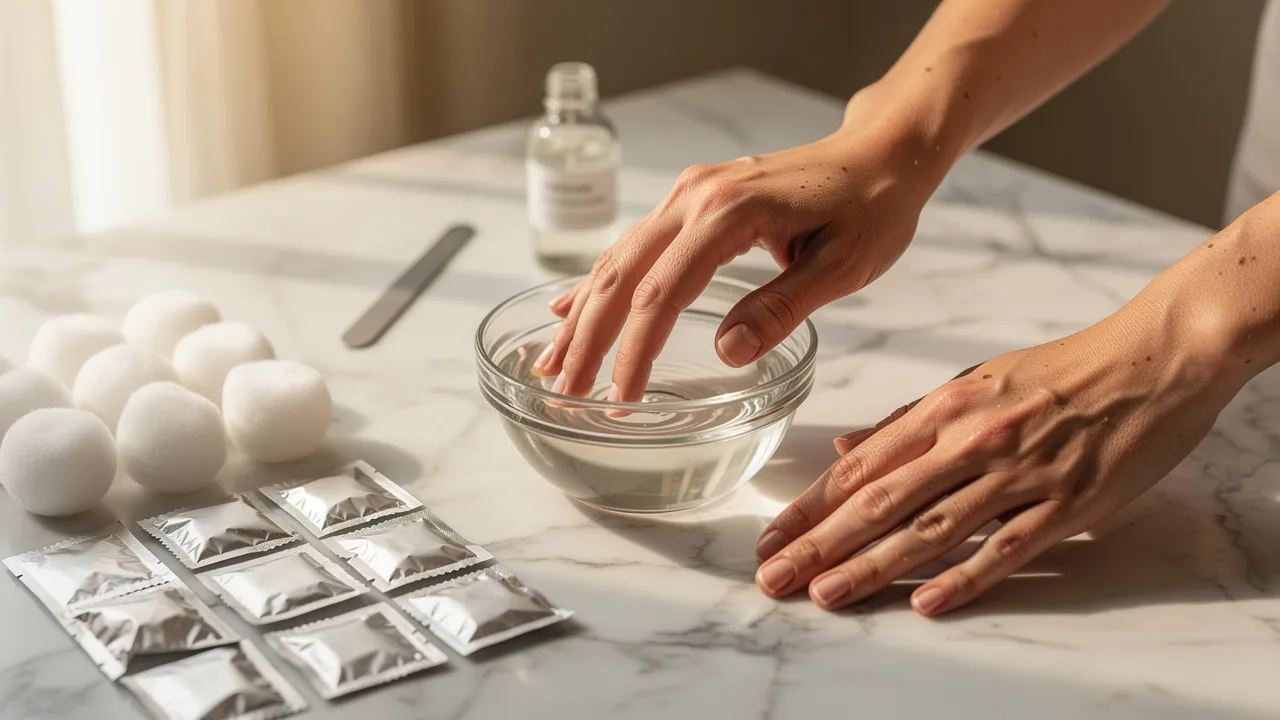
Short answer: File off the shiny top layer, wrap each nail in acetone-soaked cotton and foil, wait until the powder softens, then gently ease it off. Never peel or scrape dip powder off before it has softened.
Dip powder is tough on purpose, which is why peeling it off takes layers of your natural nail with it. Soaking is slower, but it protects the nail plate. This guide covers the common home method. If you are unsure, have a nail professional remove it.
What you need
- A coarse file (about 100 to 180 grit) for the top layer. See the nail file grit chart if you are unsure which to use.
- 100% acetone, cotton balls or pads, and aluminum foil or reusable clips
- A wooden or orange stick, a soft buffer, cuticle oil and hand cream
- A well-ventilated room. Acetone is flammable, so keep it away from flames and heat.
Step by step
- 1. Break the seal. File the glossy top coat and the top layer of color until the surface looks dull. This lets the acetone reach the powder.
- 2. Protect your skin. Rub petroleum jelly or cuticle oil around the nails. Acetone dries skin.
- 3. Wrap. Soak a cotton piece in acetone, set it on the nail and wrap the fingertip in foil. A common starting point is 10 to 15 minutes.
- 4. Check one nail. If the powder looks flaky and lifts, gently push it off with the stick. If it is still firm, re-wrap and wait a few more minutes.
- 5. Finish. Lightly buff any remaining residue, wash your hands, then apply cuticle oil and hand cream.
Mistakes to avoid
- Peeling, prying or scraping powder that has not softened. This strips layers of keratin.
- Over-filing the natural nail while removing the top layer.
- Soaking the whole hand in a bowl of acetone for a long time, which dries skin more than wrapping individual nails.
- Applying a new set straight away. Giving nails a short rest helps you spot problems.
If you see redness, swelling, pain, or a nail that is lifting from the bed after removal, see a doctor or dermatologist. For aftercare, see how to strengthen nails after gel.
If the powder will not soften
Thick or heavily layered dip powder can take longer. Re-wrap the stubborn nails with fresh acetone cotton and wait a few more minutes. If it still does not soften, you may not have filed through the top coat, so remove the foil, file the surface again and re-wrap. Do not scrape hard to speed things up.
Why peeling off fails
Peeling pulls the product and layers of keratin away together. It leaves nails thin, rough and sore, and the damage can last for weeks. Soaking is slower and far kinder to the nail plate.
Protecting your skin
- Apply petroleum jelly or cuticle oil to the skin around each nail before wrapping.
- Keep acetone off cuts and irritated skin.
- Wash your hands with mild soap after removal, then moisturize.
Aftercare in the days after removal
Apply cuticle oil twice a day and a rich hand cream, keep nails short, and wear gloves for chores. A short break before the next set gives you a chance to spot any thinning or sensitivity. If a nail looks discolored, feels sore, or the skin is red, see a doctor or dermatologist.
When to have a professional do it
Choose a salon if the dip is very thick, if you have lifting with moisture trapped underneath, if the skin is irritated, or if you are unsure what product you have.
FAQs
How long does dip powder take to soak off?
Often 10 to 15 minutes once the top layer is filed, but it varies by product and thickness. Check one nail before unwrapping the rest.
Can I remove dip powder without acetone?
Cured dip powder is hard to remove without acetone. A nail professional can file it down, but do not pry or peel it at home.
Will my nails be weak afterwards?
Nails can feel thin or dry after any enhancement. Gentle removal, cuticle oil and a short break between sets usually help.
Related guides
More in this topic: Acrylic Nails guides.