

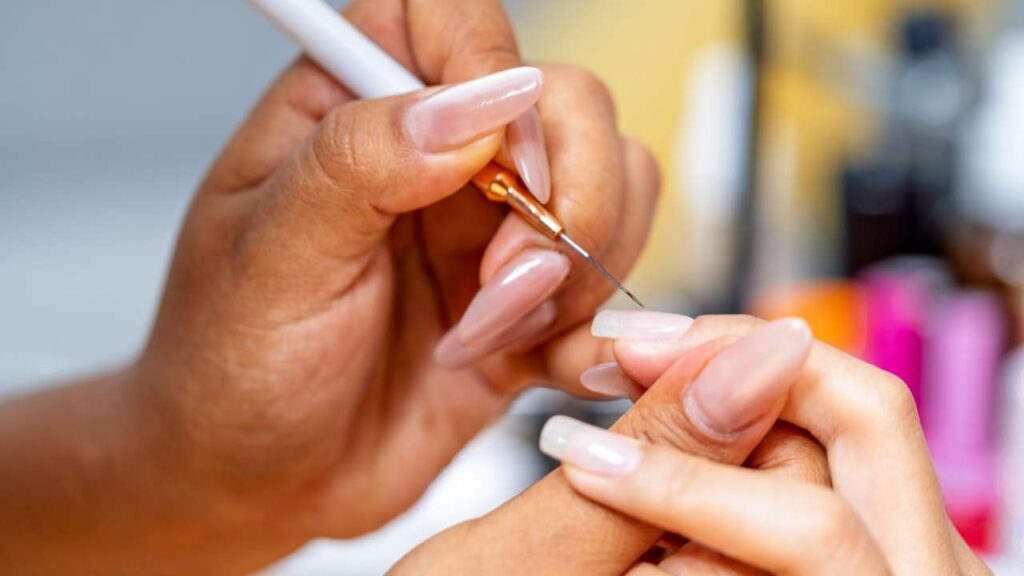
Have you ever walked out of a nail salon feeling confident about your fresh Gel X extensions, only to watch them lift, pop off, or develop air bubbles within days? You’re not alone. Industry data reveals that nearly 20% of Gel X applications experience premature failure within the first week, and the culprit isn’t always poor product quality or careless aftercare. More often than not, the problem lies in a fundamental mismatch between your natural nail anatomy and the pre-formed tip applied to it.
Think of it like trying to fit a curved puzzle piece into a flat space. No amount of pressure or adhesive can compensate for an architectural incompatibility. Your natural nails have distinct shapes, curves, and dimensions that vary dramatically from person to person. Some have flat nail beds with minimal arch, while others possess deep C-curves that create dramatic sidewalls. When a technician selects a Gel X tip without considering these individual characteristics, they’re setting the stage for failure before the first flash of UV light.
This frustration is particularly disheartening for professional women who invest both time and money into maintaining polished, work-appropriate nails. The promise of Gel X is appealing: lightweight extensions that look natural, last weeks, and don’t damage your nail beds like traditional acrylics. But achieving those results requires more than just quality products. It demands an understanding of why certain nail shapes resist proper adhesion and how precise technique can overcome these challenges.
In this guide, we’ll explore the science behind Gel X application failures on specific nail anatomies. You’ll discover why that “Sculpted” tip keeps popping off your flat nail bed, why your extensions always lift at the sides, and how proper preparation and technique can transform your Gel X experience from frustrating to flawless. By understanding these principles, you’ll know exactly what to look for in a skilled technician and why precision matters more than you might have realized.
The architectural mismatch between natural nail curves and pre-formed tips
The most fundamental reason Gel X extensions fail has nothing to do with the quality of the gel or your aftercare routine. It’s about basic geometry. Gel X manufacturers typically offer two primary tip styles: “Natural” tips with a subtle, gentle curve, and “Sculpted” tips featuring a high apex and dramatic C-curve. The problem? Most people don’t have the highly arched nail beds that Sculpted tips are designed to complement.
When you look at your natural nails from the side, you’ll notice they have a certain amount of curve from sidewall to sidewall. This is called the C-curve. Some people have relatively flat nail beds with just a hint of arch, while others have nails that curve deeply, creating pronounced sidewalls. Here’s where the trouble starts: if a technician applies a Sculpted tip (with its dramatic built-in arch) to a flat or subtly curved nail bed, a significant gap exists between the center of your natural nail and the underside of the tip.
To compensate for this gap, technicians often apply excessive downward pressure during application, trying to force the tip to make full contact with the nail surface. In that moment, with pressure applied and the gel still uncured, everything seems fine. But here’s the critical issue: once that pressure is released after curing, the plastic tip “remembers” its original high-arch shape. It wants to spring back to that sculpted form. This creates constant upward tension at the center of the nail, essentially pulling against the adhesive bond every single moment you wear the extension.
Think of it like pressing down on a curved piece of plastic to flatten it temporarily. The moment you let go, it pops back up. That’s exactly what’s happening with your Gel X extensions, except the adhesive gel is trying to hold it down. Eventually, that persistent tension overcomes the bond, and the extension lifts or pops off entirely, often within just a few days.
The opposite scenario creates problems too. If you have naturally deep C-curves and a technician applies a Natural curve tip (which is flatter), the edges won’t have adequate support. The tip will make good contact at the center but leave the sidewalls unsupported, creating weak points where lifting typically begins.
The answer isn’t complicated, but it requires careful assessment. Before any gel touches your nail, a skilled technician should hold different tip styles against your natural nail from the side to visually check for gaps or pressure points. For clients with flat or subtle nail beds, Natural curve tips are almost always the better choice. They can be gently molded or rolled during application to match your anatomy without creating that destructive tension.
At Xpert Russian Manicure Salon, this assessment of each client’s natural nail structure is a non-negotiable first step. By matching tip architecture to individual anatomy rather than forcing a one-size-fits-all approach, the salon makes certain that extensions sit flush against the nail plate without creating stress points. This attention to structural compatibility is what separates a Gel X application that lasts three to four weeks from one that fails within days.
Sizing errors and lateral fold complications that compromise adhesion
Even when you’ve selected the right tip curve for your nail anatomy, improper sizing can sabotage the entire application. The gold standard for Gel X success is what professionals call a “flush fit”: the tip must sit entirely within the boundaries of your natural nail plate without touching the surrounding skin or leaving any nail surface exposed. This precision is harder to achieve than it sounds, and sizing errors are among the most common causes of premature lifting.
When a tip is too small for your nail bed, it doesn’t provide adequate width coverage from sidewall to sidewall. To make the adhesive gel reach across the entire nail surface, the technician must apply excessive pressure, spreading the gel beyond where the tip naturally wants to sit. This creates localized stress points, particularly at the sides of the nail, where the bond becomes unstable. These pressure points are weak spots where lifting typically begins, often within the first 48 hours.
Oversized tips create an entirely different problem, but one that’s equally destructive to adhesion. When a tip is too wide for your nail, it overlaps onto the lateral nail folds (the skin on either side of your nail plate). This might seem like a minor issue, but it’s actually a critical failure point. Gel X is a non-acidic system that relies on creating a perfect seal between the extension and the nail plate. The moment any part of that tip or the adhesive gel makes contact with skin rather than nail, you’ve introduced a pathway for failure.
Your skin naturally produces oils, even with the best preparation. When gel contacts these lateral folds, those oils gradually seep under the extension edge, breaking down the adhesive bond from the outside in. This is why so many people experience lifting that starts at the sides of the nail and works its way toward the center. It’s not that the gel failed; it’s that the gel was never properly bonded to nail tissue in the first place.
The width challenge becomes even more complex when you consider that not all fingers on your hand have the same nail bed width. Your thumbs typically have the widest nail beds, while your pinkies are often the narrowest. A technician who uses the same size tip across multiple fingers without customization is almost guaranteeing sizing problems on at least some nails.
For oversized tips, the answer is customization through careful filing. Before any gel is applied, the tip should be filed at the sides to fit perfectly within your natural nail boundaries. This takes time and precision, but it’s the only way to make certain that every millimeter of the tip’s underside will contact nail plate rather than skin. For clients with particularly wide nail beds, narrow nail plates, or irregular nail shapes, this customization step becomes even more important.
Proper sizing also prevents the edge lifting that commonly occurs within the first few days of wear. When tips are sized correctly and filed to a flush fit, there are no gaps where moisture can seep in and no skin contact that introduces oils into the bond. At Xpert Russian Manicure Salon, the comprehensive Russian dry manicure preparation creates a pristine, completely dehydrated surface that maximizes the contact area for proper adhesion. This meticulous preparation, combined with precise tip sizing and customization, makes certain that extensions remain securely bonded for the full three to four weeks of wear, regardless of your natural nail shape or width.
Gel volume management and the critical role of proper application technique
The adhesive gel used in Gel X applications serves as the structural bridge between your natural nail and the extension. It’s not just glue; it’s an engineered material that must fill every microscopic gap and irregularity in your nail surface to create a complete, bubble-free bond. Getting the volume and application technique right is where many Gel X applications succeed or fail, particularly on challenging nail shapes.
Using too little gel is one of the most common mistakes, especially on nails with deep sidewalls or irregular contours. When there isn’t enough adhesive to fill the space between the natural nail and the tip, void areas or air pockets form. These aren’t just cosmetic issues. Air pockets are weak spots in the structure where moisture can collect, creating an environment for bacterial growth (the dreaded “greenies”) or simply providing a starting point for the extension to detach. On nails with pronounced curves or uneven surfaces, adequate gel volume is even more critical because there’s more three-dimensional space to fill.
On the flip side, using too much gel creates its own set of problems. When excess adhesive squirts out from the cuticle area or the sides during application, it forms ridges or bulges. If these aren’t carefully cleaned before curing, they create a “ledge” that catches on hair, clothing, and everyday objects. Every time that ledge snags on something, it creates a tiny pulling force on the extension. Over days and weeks, these repeated micro-traumas add up, eventually prying the nail up from the base.
Professional technicians use what’s called the “dollop” technique to achieve the perfect gel volume:
First, they outline the entire underside edge of the tip with a thin bead of gel
Then, they place a slightly larger dollop of gel specifically at the cuticle end of the tip
This strategic placement allows gravity and pressure to work together during application
As the tip is lowered at a 45-degree angle, the gel flows naturally from the cuticle end toward the free edge, filling any anatomical gaps specific to that nail shape without creating excess overflow.
The application angle and pressure control are just as important as gel volume. The tip should be positioned at approximately 45 degrees to the nail, then gradually lowered while maintaining consistent pressure at the cuticle base. This technique allows the gel to spread evenly without trapping air bubbles. The highest pressure should be at the cuticle area to create a seamless transition, with lighter pressure as you guide the tip down toward the free edge.
Here’s where many applications fail: the “flash-cure” moment. After placing the tip with perfect pressure and gel distribution, it must be held absolutely steady while being cured with a handheld LED lamp for five to ten seconds. This brief cure “freezes” the gel in place, locking in that perfect positioning. If the technician has to reach for a lamp, adjust their grip, or if you have to move your hand toward a table-mounted lamp during this critical window, the gel shifts. Even microscopic movement can introduce air bubbles or cause the tip to slide away from the cuticle, creating a weak bond that will fail within days.
This is why professional setups include handheld or easily accessible LED lamps. The technician needs to maintain that steady pressure while simultaneously curing the gel, without any fumbling or repositioning. It’s a coordinated process that requires both hands working in perfect sync.
At Xpert Russian Manicure Salon, the flawless, bubble-free application technique prevents moisture trapping and creates seamless bonds on even the most challenging nail shapes. The salon’s precision nail architecture approach goes beyond just applying tips. It involves correct apex engineering (the highest point of the extension’s curve) and balanced sidewalls that distribute stress evenly across the entire structure. This architectural precision means that whether you have flat nails, deep C-curves, wide nail beds, or short nail plates, the extensions are engineered to handle the mechanical stress of daily life without cracking, lifting, or popping off prematurely.
Summary
Gel X application failure on certain nail shapes isn’t a mystery or a matter of bad luck. It comes down to three primary causes: architectural mismatch between tip curve and natural nail shape, improper sizing that creates tension or skin contact, and inadequate gel volume or application technique. The good news is that none of these issues are insurmountable. With proper nail assessment, careful tip selection, and meticulous application, Gel X can achieve three to four weeks of flawless wear on virtually any nail anatomy.
The difference between extensions that pop off within days and those that last for weeks isn’t about product quality. It’s about expertise, precision, and understanding the specific architecture of each client’s nails. Professional preparation techniques like Russian dry manicure create the pristine, dehydrated surface that maximizes adhesion, while proper apex engineering and balanced sidewalls make certain that extensions can withstand the mechanical stress of daily life without structural failure.
“The secret to long-lasting nail extensions isn’t found in expensive products, it’s in understanding the science of how natural nails and artificial tips interact, then applying that knowledge with precision and care.”
If you’ve struggled with Gel X lifting, peeling, or popping off, the answer isn’t to give up on the system. It’s to seek out experienced technicians who understand nail anatomy and take the time to match tip architecture to your specific nail shape. When application is done right, Gel X offers the perfect combination of durability, natural appearance, and nail health protection that busy professionals need for both work and social settings.
FAQs
Can Gel X work on very flat or wide nail beds?
Absolutely. Gel X can work beautifully on flat or wide nails when proper technique is applied. The key is selecting “Natural” curve tips rather than “Sculpted” versions for flat nail beds, as these won’t create the tension that causes lifting. Wide nails require careful sizing and often need tip customization through side filing to achieve a flush fit. Complete nail plate dehydration through professional preparation (like Russian dry manicure) is necessary for creating the pristine surface needed for strong adhesion on these challenging shapes.
Why do my Gel X extensions keep lifting at the sides?
Lateral lifting almost always points to improper tip sizing, typically from oversized tips that touch the skin on the sides of your nail. When gel contacts your lateral nail folds, natural skin oils seep under the extension edge and break the bond. Another common cause is insufficient gel coverage at the sidewalls, leaving gaps where moisture can penetrate. The answer is making certain tips are filed to fit flush within your natural nail boundaries without any skin contact, and that adequate gel fills the entire space between your nail and the tip.
How long should Gel X last on short or bitten nails?
On healthy nails with proper application, Gel X typically lasts three to four weeks. Short or bitten nails may have slightly shorter longevity, potentially two to three weeks, simply because there’s less surface area for the gel to grip. However, proper preparation and technique become even more important on short nails. The good news is that Gel X serves as a protective shield for damaged or bitten nails, allowing the natural nail to grow and strengthen underneath without exposure to daily stressors that would otherwise slow recovery.
What’s the difference between application failure and normal wear?
Application failure shows up as lifting, popping off, or air bubbles within the first week of wear. This indicates problems with technique, sizing, or preparation rather than normal product lifespan. Normal wear involves gradual growth-out over three to four weeks, with the extension remaining securely bonded at the base without any lifting. If your extensions consistently fail within the first week, the issue isn’t the Gel X system itself but rather how it’s being applied to your specific nail anatomy.