
Acrylic nails offer a stunning, long-lasting look, but the thought of their removal can sometimes cause some worry. Many worry about the harsh effects of traditional acetone soaks. The drying, the brittleness, the uncomfortable sensation that leaves natural nails feeling vulnerable. You might want a gentle, effective way to get back to your natural nails without exposing them to potent chemicals, keeping them strong and beautiful. The good news is that achieving this is possible, whether through careful at-home methods that avoid harsh solvents entirely or by opting for professional services that prioritize natural nail health through minimized chemical exposure. This guide explores how to take off acrylic nails without acetone, offering practical DIY techniques and introducing the advanced, protective approach of Xpert Russian Manicure Salon for a truly gentle removal experience.
The desire for gentle removal and understanding acetone concerns
The standard method for removing acrylic nails in many salons involves soaking them in acetone, a strong solvent that dissolves the tough acrylic polymer. While effective, this common practice has several disadvantages that lead people to search for alternatives. The main concern is the impact on natural nail health. Acetone is very drying; it takes away natural oils from the nails, cuticles, and surrounding skin. Doing this repeatedly can make nails brittle, weak, and likely to peel or break.
Besides harming the nail plate physically, the removal process can be uncomfortable. Acetone’s strong chemical smell can be unpleasant and might cause headaches for some. People with sensitive skin might also experience irritation, redness, or even allergic reactions. This has led many clients and nail professionals to prefer gentler removal methods that protect the nails’ long-term health. As nail care expert Sally Hurell once noted,
“Healthy nails are a reflection of careful practices, not just beautiful finishes.”
While this guide focuses on how to remove acrylic nails without acetone, the philosophy of gentle care applies to other enhancements too. Simple press-on or glue-on nails can often be removed with these gentler methods, but more complex applications like professionally applied gel nails typically require a technician’s expertise to avoid damage.
Your guide to safe at-home acrylic nail removal without harsh chemicals
If you prefer to handle your nail care at home, there are several effective methods that allow you to remove fake nails without acetone. These methods need patience but result in healthier natural nails. Before you begin any method, good preparation is important for a smooth and safe process.
First, gather your tools. You will need nail clippers, a coarse-grit nail file, an orangewood or cuticle stick, a bowl, and your chosen softening agent (like soap, oil, or a non-acetone remover). Start by using the nail clippers to trim your acrylics as short as you comfortably can. This reduces the surface area and makes removal easier. Next, take your coarse nail file and gently buff the top surface of the acrylics. The goal is to reduce the thickness and break the top seal, which helps the softening agent get through better. Be careful not to file down to your natural nail. If any edges of the acrylics are already lifting, you can use an orangewood stick to gently create a small gap, but never force it.
The warm water and soap method: This is one of the simplest and most accessible options. Fill a bowl with warm (not hot) water and add a few drops of mild hand or dish soap. Submerge your fingertips and let them soak for 30 to 40 minutes. The warm, soapy water helps soften the acrylic and glue gradually. As they soften, you can use an orangewood stick to gently push and lift the acrylics away from your natural nail. This chemical-free method is suitable for those with sensitive skin.
The acetone-free nail polish remover technique: For a slightly stronger approach, you can use an acetone-free nail polish remover. These products typically use less harsh, alcohol-based solvents to break down nail glue. Pour the remover into a bowl and soak your nails for about 40 minutes. Since it works more slowly than pure acetone, patience is key. Once the acrylics feel loose, you can use tweezers or an orangewood stick to carefully pry them off.
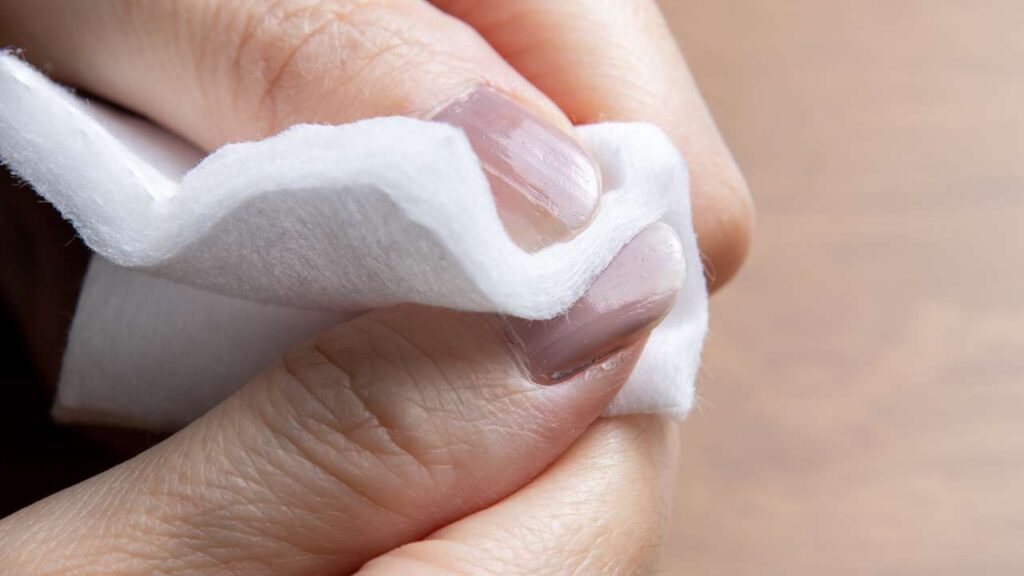
The nourishing oil methods: Using oils like cuticle oil or coconut oil helps remove glue on nails without acetone and also conditions your nails and skin at the same time. For the cuticle oil method, saturate a cotton ball and press it against any lifting edges for about five minutes per nail. The oil will go underneath and loosen the glue. For the coconut oil method, gently warm some oil and soak your nails, massaging the oil into the cuticles and under the acrylics. With either oil, you can then use a cuticle stick to gently work the nail off. Always stop if you feel any discomfort or resistance. Some mechanical methods, like using dental floss or business cards, can damage your natural nail and should generally be avoided.
Xpert Russian Manicure Salon’s minimal-acetone approach
While at-home methods can be effective, they often require significant time and patience. For those wanting a professional method that still puts nail health first, there are advanced options. At Xpert Russian Manicure Salon, we champion a philosophy centered on precision, hygiene, and the long-term health of your natural nails. Our way of removing acrylics shows this commitment well.
It’s important to be clear: our technique isn’t fully “acetone-free” but uses a minimal-acetone method designed for top safety and gentleness. We believe in using the right tools with expert skill to get the best results without harming the nail’s integrity. By combining precise mechanical work with a quick, targeted application of acetone, we offer a better removal process that protects your nails from a traditional, long soak’s harshness. This method perfectly combines the desire for non-chemical removal with professional efficiency, making sure your nails are cared for from start to finish.
Precise process at Xpert Russian Manicure Salon
Our distinct removal process shows the principles of the Russian Manicure, where every step is planned and controlled. It starts with one of our highly skilled technicians using an e-file with a special coarse carbide or typhoon bit. With great precision, they carefully shave away 80% to 90% of the acrylic bulk. This step is done with immense care to leave only a paper-thin layer, shielding the natural nail plate from the file.
Once the bulk of the acrylic is gone, we address the remaining thin layer. This is where a targeted application of 100% pure cosmetic acetone comes in. Instead of a long soak, we use foil wraps with a small, acetone-soaked cotton pad placed right on the nail. This stays for just 15 to 30 minutes, letting the solvent safely and effectively break down the final polymer chains. When the product gets soft and gummy, it’s gently pushed off the nail plate with a wooden manicure stick or metal pusher. We deliberately avoid any forceful prying or scraping, which makes for a comfortable experience that leaves your natural nails undamaged.
Unmatched benefits for natural nail protection
Choosing Xpert Russian Manicure Salon for acrylic removal offers clear advantages focused on natural nail protection. By mechanically removing most of the product with an e-file, we significantly reduce the time your nails and skin are exposed to acetone. This greatly lessens the drying effects often linked to standard removal methods. Our whole technique is designed to prevent aggressive filing, tearing, or prying that often causes thin, weak, and sensitive nails.
This precision comes from the Russian Manicure philosophy, which approaches nail care with detailed attention and deep respect for the nail’s structure. Our dry technique also helps nail health by allowing precise identification of living and non-living tissue during all services. This specialized process successfully stops common issues like severe nail damage and dehydration, providing a safe, professional alternative that keeps your natural nails strong and healthy.
Restoring nail health and frequently asked questions
Taking off your acrylics successfully is only half the effort. Even gentle at-home methods or professional services need a specific aftercare routine to help your natural nails recover and get strong again. Good care after removal is basic to making sure your nails stay healthy and beautiful.
Essential post-removal care regimen
Once your acrylics are off, your natural nails need some care. One of the best things you can do is take a break from enhancements every few months. This gives your nails time to breathe, rest, and grow without any covering. During this time, focus on moisturizing them well. Apply a good quality cuticle oil with jojoba or almond oil daily, massaging it into the cuticles and nail plate. Follow with a rich hand cream to keep the surrounding skin moisturized.
After removal, your nails might feel a little bumpy. Use a fine-grit buffer to gently smooth them, but don’t file too hard, as this can make them thinner. Keep them neatly shaped to avoid snags. Applying a strengthening base coat can provide a protective layer and often has vitamins and proteins to strengthen the nail. Finally, remember that nail health shows overall good well-being. A balanced diet, plenty of water, and protecting your hands with gloves during chores all help make nails strong and resilient.
Common questions about acrylic nail removal
Here are answers to some common questions people have when considering how to remove nails without acetone.
Question: Can all types of fake nails be removed without acetone?
While many glue-on nails, press-ons, and some nail wraps can be removed well with the acetone-free methods described, other types are harder. Professionally applied gel nails and Shellac have a much stronger bond to the natural nail. Trying to remove these at home without the right tools and techniques often leads to much damage. For these, it is always best to see a qualified nail technician.Question: How long do acetone-free removal methods usually take?
A main point about avoiding acetone is that it takes more time. Gentle, at-home soaking methods generally take much longer than a traditional acetone soak, often requiring around 40 minutes of soaking time plus preparation. Patience is key to making these methods work well without harming your nails. Rushing the process can lead to forcing the nail off, which can cause peeling and breakage.Question: What are the signs of nail damage during or after removal?
The quickest sign of a problem during removal is pain. You should never feel pain when taking off acrylics. If you do, stop immediately. Other signs of damage include visible peeling or thinning of the nail plate, deep white spots, too much brittleness, or discoloration after the acrylic is gone. If your nails feel very sensitive or dry after removal, it means they need a strong care routine to get healthy again.
Final thoughts
Taking off acrylics doesn’t have to damage your nails, leaving them weak and brittle. Whether you pick a patient, at-home approach with gentle soaks or go for a specialized professional service, it’s completely possible to return to your natural nails while keeping them healthy. Putting gentle techniques first is the most important step to prevent damage and support the long-term beauty of your hands. The advanced, minimal-acetone method used at Xpert Russian Manicure Salon shows how precision and skill can protect nail health while giving efficient results. As a leading nail technician once shared,